A quiet shift is happening in the mobile phone repair industry. And it centers on something as basic as it is critical: iPhone LCD screens.
For years, as Apple gradually moved toward OLED, genuine new iPhone LCD inventory became harder to find. Many repair shops turned to aftermarket copy screens or rigid OLED replacements. But the problems — touch lag, color shifting, iOS update failures — have left both shop owners and end users frustrated.
Now, a clear trend is emerging: refurbished original iPhone LCD screens are making a serious comeback.
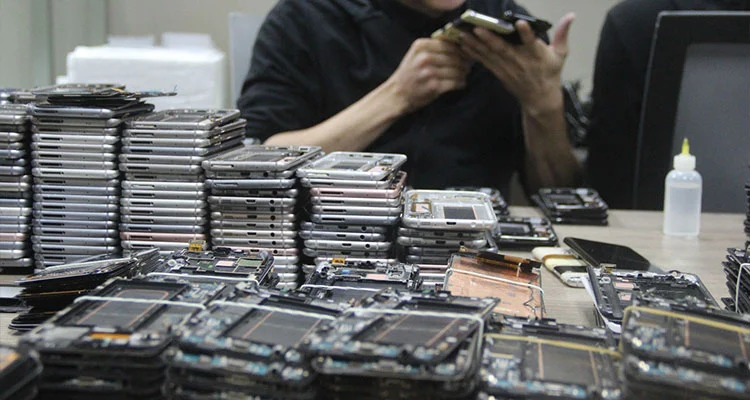
1. Not "Used" — "Tested Original"
The shift isn't random.
Every year, massive volumes of used iPhone LCDs are recovered from the US, Europe, Japan, and other markets. These screens are Apple-original — with display quality and touch performance that copy screens simply can't match. But they have one fatal flaw: untested bulk batches have terrible yield rates.
That's why, over the past two years, professional testing operations in Hong Kong and Shenzhen have quietly risen to prominence. As early as 2017, a handful of recyclers began building "one-by-one" testing lines — every single iPhone LCD checked for touch sensitivity, backlight uniformity, color accuracy, and pressure points before being sorted into A/B/C/D/E grades.
By 2026, this has become the baseline standard for serious bulk buyers.
Smart buyers no longer ask just "how much per piece." They now ask:
-
Are the screens tested individually?
-
Is the test data traceable?
-
Is the grading system transparent?
2. Repair Shops Did the Math: Refurbished Original vs. Aftermarket Copy
Take the iPhone 11 LCD — still one of the most commonly replaced screens today.
|
Comparison
|
Aftermarket Copy
|
Refurbished Original (Grade A)
|
|
Display quality
|
Cool/warm tint, narrow gamut
|
Factory-level
|
|
Touch response
|
Occasional lag, missed touches
|
Stable
|
|
iOS compatibility
|
Risk of failure after updates
|
No issues
|
|
Customer complaints
|
Higher
|
Low
|
|
Unit cost
|
Lower
|
Mid-to-high
|
More and more repair shop owners are realizing: copy screens may cost less upfront, but after-sales service and lost customers add up fast. Consistent refurbished originals often deliver better overall margins.
3. The Recycling Side Is Upgrading Too
On the other end of the supply chain — recycling — the same upgrade is happening.
A few years ago, used iPhone LCDs were treated as e-waste, sold by the kilogram. Today, professional recyclers sort by model, damage level, and display condition. Even cracked, aged, or line-bad screens enter the value chain — some refurbished, others stripped for polarizers, backlight modules, and raw materials.
Industry estimates suggest that in 2025 alone, over 8 million used iPhone LCDs passed through Hong Kong. Roughly 30% were refurbished and re-entered the repair market. The rest went into material recovery.
4. Practical Advice for Buyers
If you run a repair shop, wholesale parts business, or source from overseas, here's what to watch for when buying iPhone LCD screens in bulk:
-
Ask for test standards — Are they doing one-by-one testing? What exactly is being tested?
-
Get clear grading definitions — Grade A+, A, B, C can mean very different things across suppliers. Request specific defect descriptions (dots, lines, burn-in, uneven backlight, etc.).
-
Start with a small trial — Test 50–100 pieces yourself before scaling up.
-
Check the recycling source — Screens from stable, traceable sources tend to yield better refurbished quality.
5. Looking for More Insights?
The iPhone LCD market is changing faster than most repair shops realize. From grading standards and testing methods to price trends and recycling policies, staying informed directly affects your bottom line.
Want to dig deeper?
👉 Read our complete guide to iPhone LCD screen grading (A/B/C/D/E explained)
*(Coming from 8+ years of hands-on testing experience)*
👉 See real batch testing results: What to expect when buying 100 pieces
(Actual yield data from working repair shops)
👉 Subscribe to monthly market updates
(Price trends, new arrivals, and industry news — straight to your inbox)