When talking about modern display technology, OLED screens often receive a lot of attention because of their high contrast, deep blacks, and vibrant colors. Many people believe that OLED has completely replaced LCD technology.
However, the reality is different. LCD screens are still widely used in many electronic devices, including some Samsung products, industrial displays, tablets, monitors, and other applications.
So, what is the difference between LCD and OLED? Why do some manufacturers continue to use LCD screens? Understanding the characteristics of both technologies can help us better understand modern display solutions.
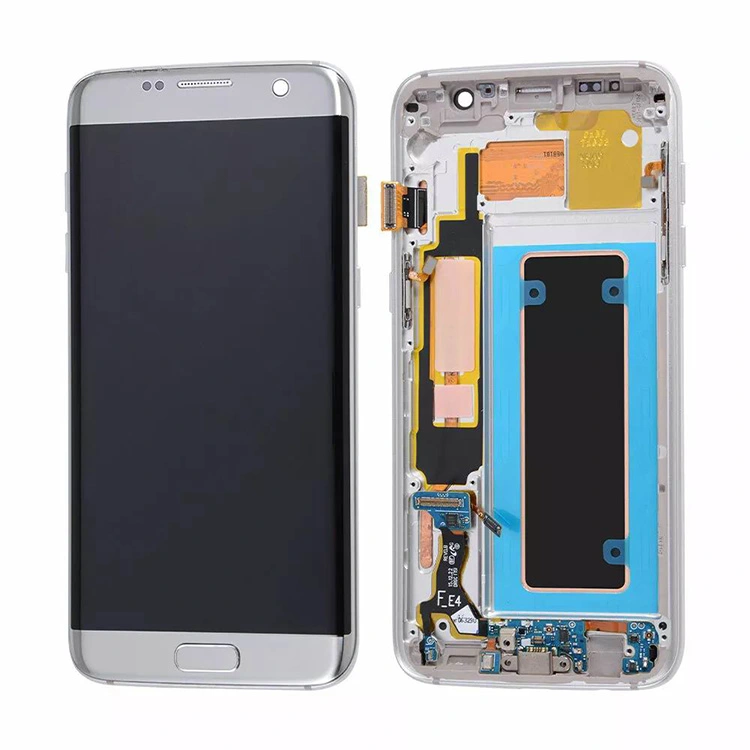
What Is an LCD Screen?
LCD stands for Liquid Crystal Display. Unlike OLED technology, LCD pixels do not produce light by themselves. Instead, they rely on a backlight system to illuminate the liquid crystal layer and create images.
The basic working process includes:
-
LED backlight provides light
-
Liquid crystal layer controls light transmission
-
Color filters create different colors
-
Pixels combine to display images
Because of its mature technology and stable performance, LCD has become one of the most widely used display technologies worldwide.
What Is an OLED Screen?
OLED stands for Organic Light-Emitting Diode. Unlike LCD, each pixel in an OLED display can produce its own light.
This self-emitting technology allows OLED screens to achieve:
-
True black levels
-
Higher contrast ratios
-
Thinner display designs
-
Flexible screen possibilities
OLED technology has become popular in many premium smartphones and high-end display products.
LCD vs OLED: What Are the Real Differences?
|
Feature
|
LCD
|
OLED
|
|
Light Source
|
Uses LED backlight
|
Each pixel produces its own light
|
|
Black Level
|
Depends on backlight control
|
Can achieve true black
|
|
Contrast
|
Good contrast performance
|
Higher contrast ratio
|
|
Thickness
|
Usually requires backlight structure
|
Can be thinner
|
|
Burn-in Risk
|
Very low risk
|
Possible with long-term static images
|
|
Cost
|
Generally more affordable
|
Usually higher production cost
|
|
Technology Maturity
|
Highly developed and stable
|
Continuously improving
|
Why Do Some Samsung Devices Still Use LCD Screens?
Although OLED has many advantages, LCD technology still offers several practical benefits that make it suitable for specific applications.
1. Stable Long-Term Performance
LCD technology has been developed for many years and has proven reliability in different environments.
For devices that require long operating hours, stable image performance is an important consideration.
2. Lower Production Cost
Manufacturing cost is an important factor for many electronic products.
LCD production processes are mature, allowing manufacturers to provide reliable displays at a more accessible price level.
3. Lower Burn-In Concern
One advantage of LCD screens is that they have a very low risk of image retention or burn-in.
This makes LCD suitable for applications that display fixed information for long periods, such as:
-
Industrial equipment displays
-
Information screens
-
Control panels
-
Commercial terminals
4. Good Brightness Performance
LCD screens can provide strong brightness output with LED backlight technology.
This makes them suitable for environments where screen visibility is important.
Where Are Samsung LCD Screens Commonly Used?
LCD technology continues to play an important role in many industries and applications.
-
Mobile device displays
-
Tablets
-
Computer monitors
-
Industrial control panels
-
Commercial display systems
-
Automotive displays
Are OLED Screens Always Better Than LCD Screens?
The answer depends on the application.
OLED may be preferred when users need:
-
Extremely high contrast
-
Premium visual experience
-
Ultra-thin design
LCD may be a better choice when applications require:
-
Long-term stability
-
Cost control
-
Continuous operation
-
Lower maintenance concerns
Different technologies serve different needs. The best display solution depends on the product design and usage environment.
The Future of LCD Display Technology
Although OLED continues to grow, LCD technology is still evolving.
Future LCD developments may include:
-
Mini LED backlight technology
-
Higher resolution displays
-
Improved color accuracy
-
Lower power consumption
-
Better viewing experiences
Rather than disappearing, LCD technology continues to improve and remains an important part of the global display industry.
Conclusion
LCD and OLED are not simply technologies where one completely replaces the other. Each has its own advantages and suitable applications.
While OLED provides excellent contrast and premium image quality, LCD screens remain valuable because of their stability, affordability, and long-term reliability.
For Samsung LCD screens and other display applications, understanding the differences between LCD and OLED helps users and businesses choose the right technology for their specific needs.