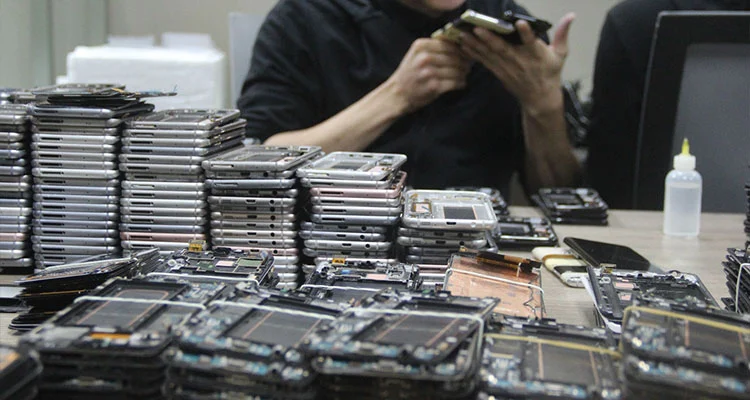
As global shipments of foldable smartphones continue to rise, Fold Series LCD Screens have become one of the most technically demanding segments in the consumer electronics aftermarket. Unlike standardized processes for traditional flat-panel displays, flexible screens present unique challenges in physical structure, electrical characteristics, and failure modes, requiring specialized capabilities in testing, grading, and refurbishment.
Market Background
According to IDC data, global foldable smartphone shipments exceeded 22 million units in 2025, with cumulative installed base surpassing 50 million units. Samsung holds approximately 65% of this market, making its Fold series the largest source of aftermarket repair demand for Fold Series LCD Screens. Industry research indicates a 7-9% screen-related failure rate within 12 months of use on foldable devices, significantly higher than the 3-5% rate for traditional flagship bar-type phones. Hinge-area flex cable fractures, flexible substrate delamination, and touch sensor failure rank as the top three failure modes. Official replacement costs for new foldable screen assemblies typically range from 200to400, with wait times of 5-10 business days. This reality has accelerated the maturation of professional recovery and refurbishment channels for Fold Series LCD Screens.
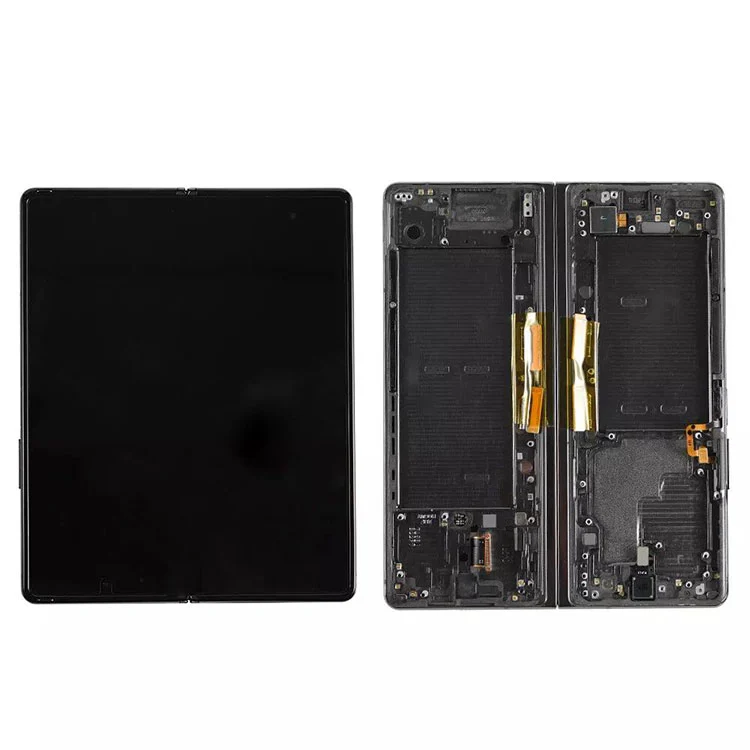
Samsung Fold Series Display Specifications
The following table presents the model identifiers and key technical specifications for Fold Series LCD Screens currently available in the aftermarket:
|
Product Model
|
Compatible Device
|
Panel Type
|
Main Display Size
|
Resolution
|
Refresh Rate
|
Driver IC
|
|
Fold 6 LCD
|
Galaxy Z Fold6
|
Dynamic AMOLED 2X
|
7.6"
|
2160×1856
|
120Hz
|
S6SY761X
|
|
Fold 5 LCD
|
Galaxy Z Fold5
|
Dynamic AMOLED 2X
|
7.6"
|
2176×1812
|
120Hz
|
S6SY761
|
|
Fold 4 LCD
|
Galaxy Z Fold4
|
Dynamic AMOLED 2X
|
7.6"
|
2176×1812
|
120Hz
|
S6SY760
|
|
Fold 3 LCD
|
Galaxy Z Fold3
|
Dynamic AMOLED
|
7.6"
|
2208×1768
|
120Hz
|
S6SY759
|
|
Fold 2 LCD
|
Galaxy Z Fold2
|
Dynamic AMOLED
|
7.4"
|
2213×1689
|
120Hz
|
S6SY758
|
|
Fold LCD
|
Galaxy Fold (1st Gen)
|
Dynamic AMOLED
|
7.3"
|
2152×1536
|
60Hz
|
S6SY757
|
Compatibility Note: Connector pinouts and flex cable assignments differ across generations. Cross-generation replacement is not supported.
Technical Failure Mechanisms
From an engineering perspective, failures in Fold Series LCD Screens follow identifiable physical patterns rather than random distribution.
Hinge-Area Metal Trace Fatigue Fracture
Multi-layer metal traces (data lines, scan lines, power lines) beneath the flexible OLED panel experience cyclic bending stress during repeated folding. Laboratory data shows that while Samsung rates these displays for 200,000 folds, real-world usage with hinge tolerances and dust ingress produces micro-cracks in some samples after 80,000-100,000 cycles. Electrical testing reveals one or more vertical lines (bright or dark), indicating open or short circuits. This failure type can be addressed through precision bonding equipment, locating fracture points under 100x magnification and re-establishing electrical connections using anisotropic conductive film (ACF) with thermocompression bonding.
Flexible Substrate Delamination Resulting in Touch Loss
The touch sensor layer on foldable displays typically uses silver nanowire or metal mesh materials coated on a flexible polyimide substrate. Prolonged folding may cause localized separation between the substrate and cover glass optical adhesive layer, resulting in touch signal interruption. The typical symptom is a 2-3cm wide band across the middle of the display with no touch response. This requires cleanroom environment cleaning and re-lamination using high-transmittance optical adhesive with vacuum bonding equipment. Fewer than 12-15% of repair facilities can consistently address this issue.
Driver IC or Flex Cable Complete Failure
Some Fold Series LCD Screens appear physically undamaged but show no display output. Fault isolation testing typically identifies either a failed driver IC or a broken long flex cable running through the hinge area, which represents the mechanical weak point in the signal path. After locating the faulty segment using diagnostic boards, the flex cable can be replaced or the driver IC reballed. This repair type has the lowest cost among the three major failure categories, with success rates exceeding 85%.
Five-Level Grading Standard
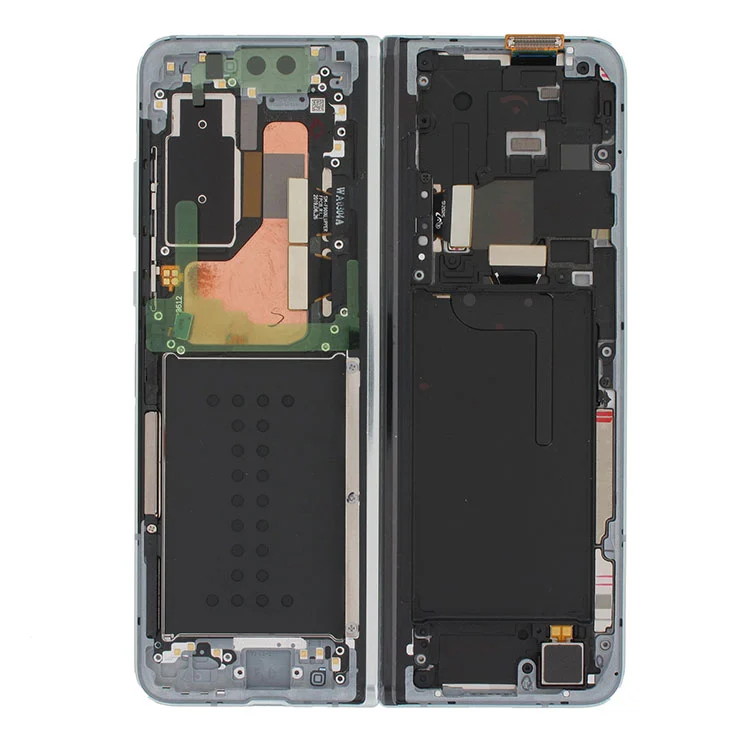
Professional recovery operations have established a refined grading system for processing Fold Series LCD Screens:
|
Grade
|
Definition
|
Electrical Test Standard
|
Disposition Path
|
|
A
|
Full-function good unit
|
Touch deviation <1.5mm across entire area, brightness uniformity >85%, no display defects
|
Direct recirculation
|
|
B
|
Minor cosmetic defect
|
Full functionality, minor polarizer scratches or frame wear allowed
|
Cleaned, downgraded circulation
|
|
C
|
Repairable functional failure
|
Flex fracture, IC failure or driver board anomaly, but panel and touch layer intact
|
Enter bonding/relamination process
|
|
D
|
Non-repairable functional failure
|
Panel fluid leakage, OLED burn-in or substrate physical fracture
|
Disassemble for component-level parts
|
|
E
|
Complete报废
|
Through-structure damage across multiple layers
|
Material recovery
|
Industry data from actual recovery runs shows that among collected Fold Series LCD Screens, Grades A and B together account for 18-22%, Grade C accounts for 35-40%, and Grades D and E make up the remainder. More than half of failed screens hold reuse or component recovery value, significantly higher than the approximately 30% reuse rate for traditional flat LCDs.
Testing Equipment Specifications
Accurate grading of Fold Series LCD Screens requires a dedicated testing equipment matrix:
|
Test Category
|
Equipment
|
Key Specifications
|
Test Items
|
|
Electrical
|
Display Tester
|
MIPI protocol support, 3.3V-5.5V adjustable
|
Gray scale, solid color, gradient patterns
|
|
Electrical
|
Touch Test Board
|
126-point matrix scan, ±0.5mm accuracy
|
Dead zone detection, drift measurement
|
|
Electrical
|
Aging Rack
|
72 hours, 25°C-45°C cycle
|
Latent failure screening
|
|
Optical
|
Light Transmission Table
|
5000-8000 Lux adjustable
|
Fluid leakage, crush damage, polarizer bubbles
|
|
Optical
|
Crease Depth Gauge
|
Laser displacement sensor, ±0.01mm precision
|
Physical crease depth measurement
|
|
Visual
|
Microscope
|
100-200x magnification
|
Gold finger oxidation, micro-cracks
|
|
Reliability
|
Temperature/Humidity Chamber
|
60°C / 90% RH
|
Post-repair stability validation
|
|
Reliability
|
Fold Tester
|
15-20 cycles/minute, programmable angle
|
Bend life sampling
|
Failure Distribution by Model
Analysis of recovered Samsung Fold series screens reveals different failure mode distributions across generations:
|
Screen Model
|
Flex Fracture
|
Touch Delamination
|
IC/Flex Cable
|
Other
|
Overall Repairability Rate
|
|
Fold 6 LCD
|
41%
|
18%
|
24%
|
17%
|
67%
|
|
Fold 5 LCD
|
44%
|
16%
|
22%
|
18%
|
68%
|
|
Fold 4 LCD
|
46%
|
15%
|
21%
|
18%
|
68%
|
|
Fold 3 LCD
|
52%
|
12%
|
19%
|
17%
|
71%
|
|
Fold 2 LCD
|
48%
|
14%
|
20%
|
18%
|
69%
|
|
Fold LCD
|
38%
|
10%
|
35%
|
17%
|
72%
|
Newer generations Fold 6 and Fold 5 show slightly improved flex cable design with lower fracture rates compared to Fold 3. First-generation Fold displays have higher driver IC failure rates but are generally easier to repair, resulting in the highest overall repairability among all generations.
Recirculation Price Ranges
The following are reference price ranges for Fold Series LCD Screens by grade in B2B distribution (USD per unit, Q1 2026 market data):
|
Screen Model
|
Grade A
|
Grade B
|
Grade C (Repaired)
|
Grade D (Parts)
|
|
Fold 6 LCD
|
$165-190
|
$140-160
|
$85-105
|
$35-45
|
|
Fold 5 LCD
|
$110-130
|
$90-110
|
$55-70
|
$25-35
|
|
Fold 4 LCD
|
$80-95
|
$65-80
|
$40-50
|
$18-25
|
|
Fold 3 LCD
|
$55-65
|
$45-55
|
$30-38
|
$12-18
|
|
Fold 2 LCD
|
$35-45
|
$28-35
|
$18-25
|
$8-12
|
|
Fold LCD
|
$25-32
|
$18-25
|
$12-18
|
$5-8
|
Pricing Notes: Grade A units suit repair channels requiring premium quality. Grade C repaired units (post-bonding or polarizer replacement) offer full functionality for price-sensitive buyers. Grade D parts provide flex cables, driver ICs, and polarizers for component-level repairs.
Supply Availability
For all six Fold Series LCD Screens (Fold 6 / Fold 5 / Fold 4 / Fold 3 / Fold 2 / Fold LCD), full-grade stable supply is available including:
-
Grades A/B: Fully tested, ready for immediate use
-
Grade C repairable: Suitable for repair facilities with bonding and lamination capabilities
-
Grades D/E parts: For component-level repair material sourcing
All shipments undergo display testing, full-area touch scanning, and visual grading with test reports provided.